A washbasin in ceramic or in natural stone?
Marble and travertine are beautiful, but they absorb water and need care. How large-format ceramic in the look of stone compares, and when it is the better choice.

A washbasin is wet every day. Soap, toothpaste, cosmetics and cleaners all end up in it. That makes the material it is made of matter more than it seems at a first look at the pattern.
What happens to marble and travertine in a bathroom
Marble and travertine are limestones. They are porous, so they absorb water and, with it, the dyes in soap and cosmetics. To keep stains from soaking in, the stone has to be sealed regularly.
The other problem is acid. Vinegar or toothpaste leaves dull marks on polished marble, because they etch the surface of the stone. Those marks do not wipe off: a stonemason has to grind and polish them out.
What large-format ceramic is
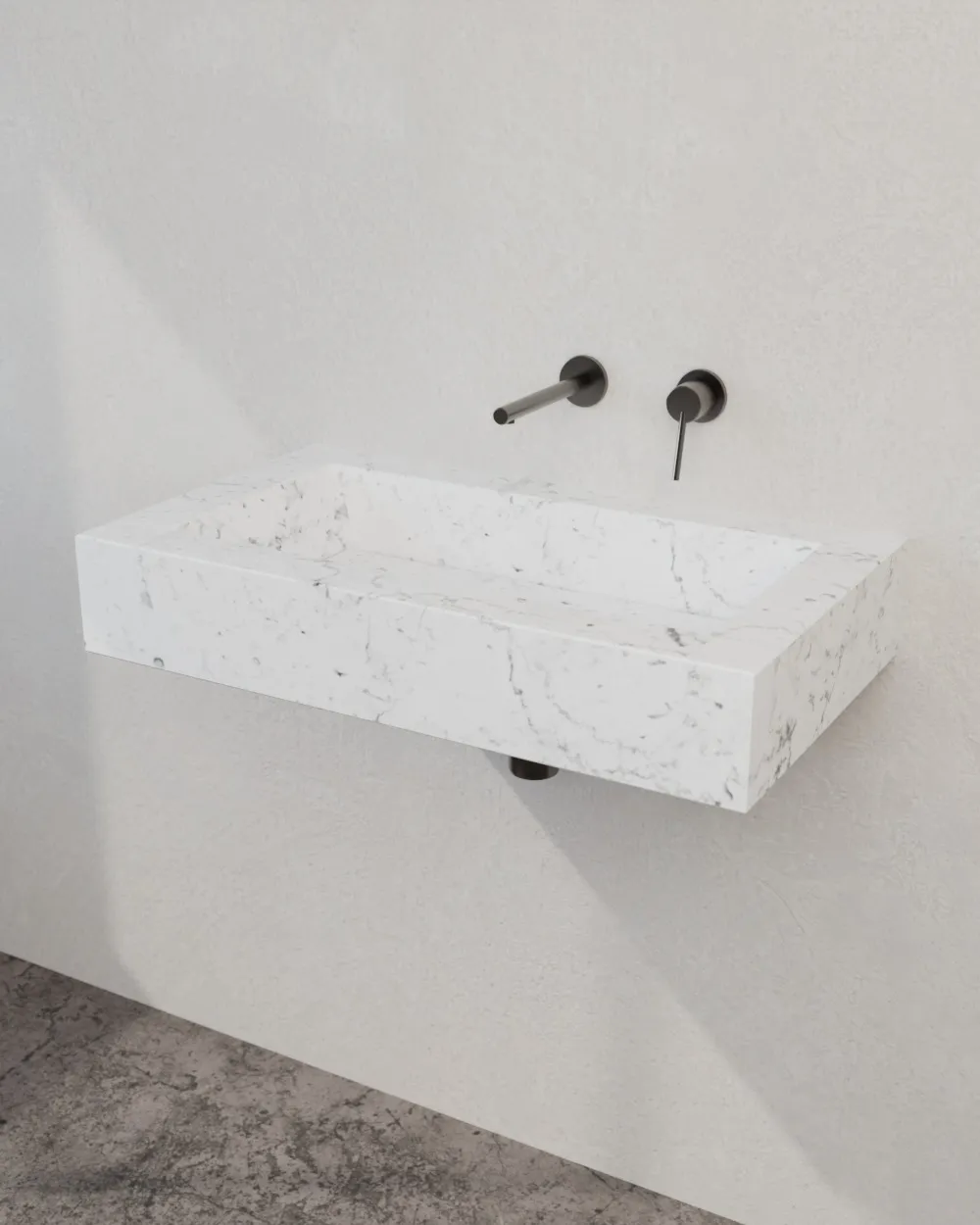
Large-format ceramic is large porcelain slabs, pressed and fired at a very high temperature. Porcelain absorbs less than 0.5 % water, so it needs no sealing, and vinegar and cosmetics do not etch it. It takes the look of marble, travertine or onyx from its surface, which carries a printed stone pattern.
In daily use this means:
- you wipe the washbasin like tiles, with a damp cloth and an ordinary cleaner,
- stains do not stick to it,
- the colour does not fade,
- the surface is polished, satin or matte, as with stone.
Where natural stone is still better
It is fair to say this too. Every slab of natural stone is unique, and its veins run through the whole stone. In ceramic the pattern is on the surface, so a chipped edge would show the inside of the slab. Stone can be ground and polished like new after years of use; ceramic cannot.
If you want the very slab you chose at a stone yard and are ready to look after it, natural stone will serve you well.
How a ceramic washbasin is made
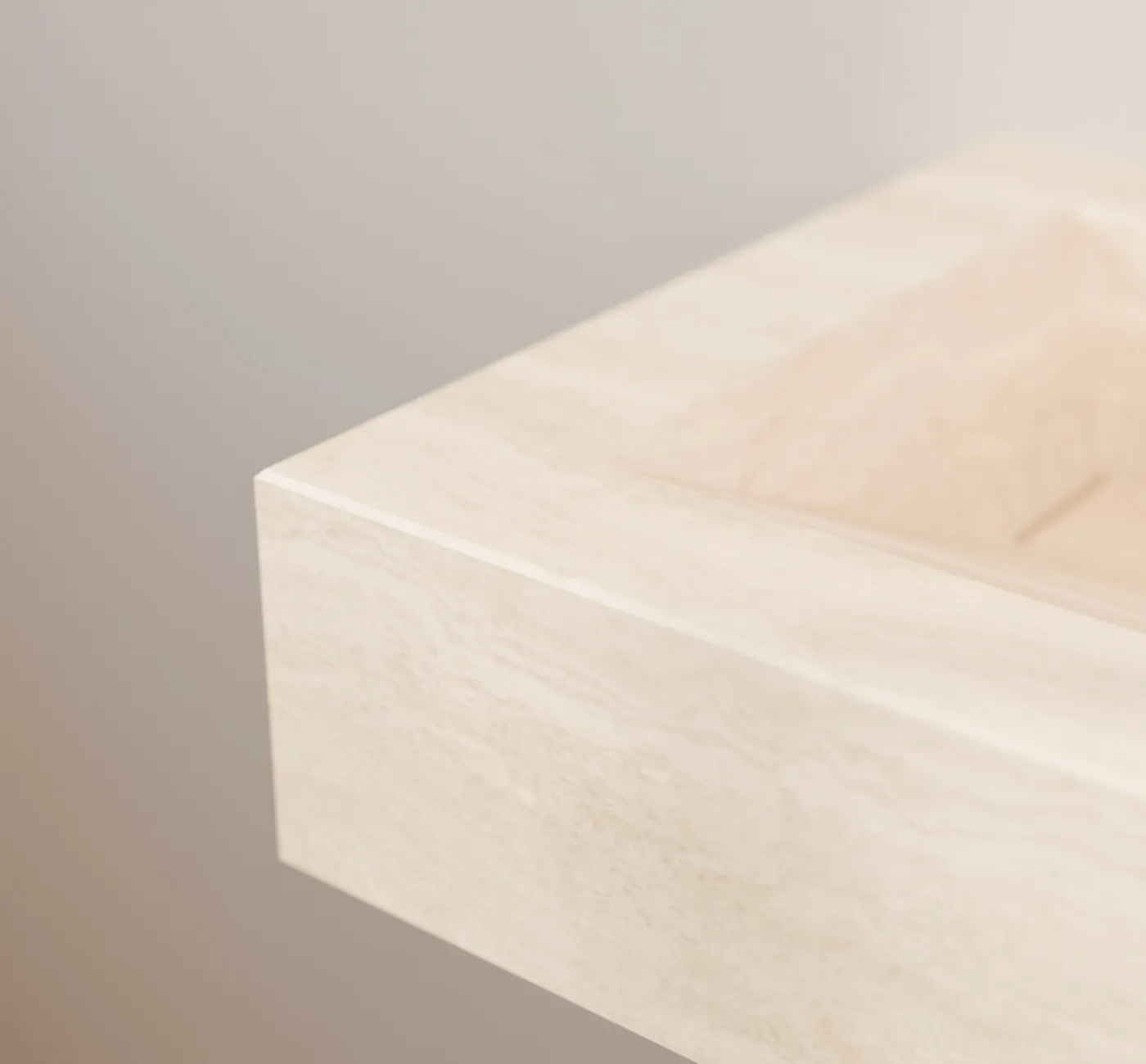
The washbasin is not made from one piece. We build it from several pieces of the same ceramic, grind their edges to 45° and bond them, so the joint lies exactly on the corner. No slab thickness shows on the edge, which looks like solid ceramic. The drain cover is the same ceramic too.
How to choose
- If you want the look of marble without the care, choose ceramic. Carrara, Calacatta and Statuario are polished, Travertine and Taj Mahal satin.
- If a unique slab matters more to you than upkeep, choose natural stone.
- Always see the ceramic in person, in the light of your own bathroom. We send samples of the ceramic you choose to your home.
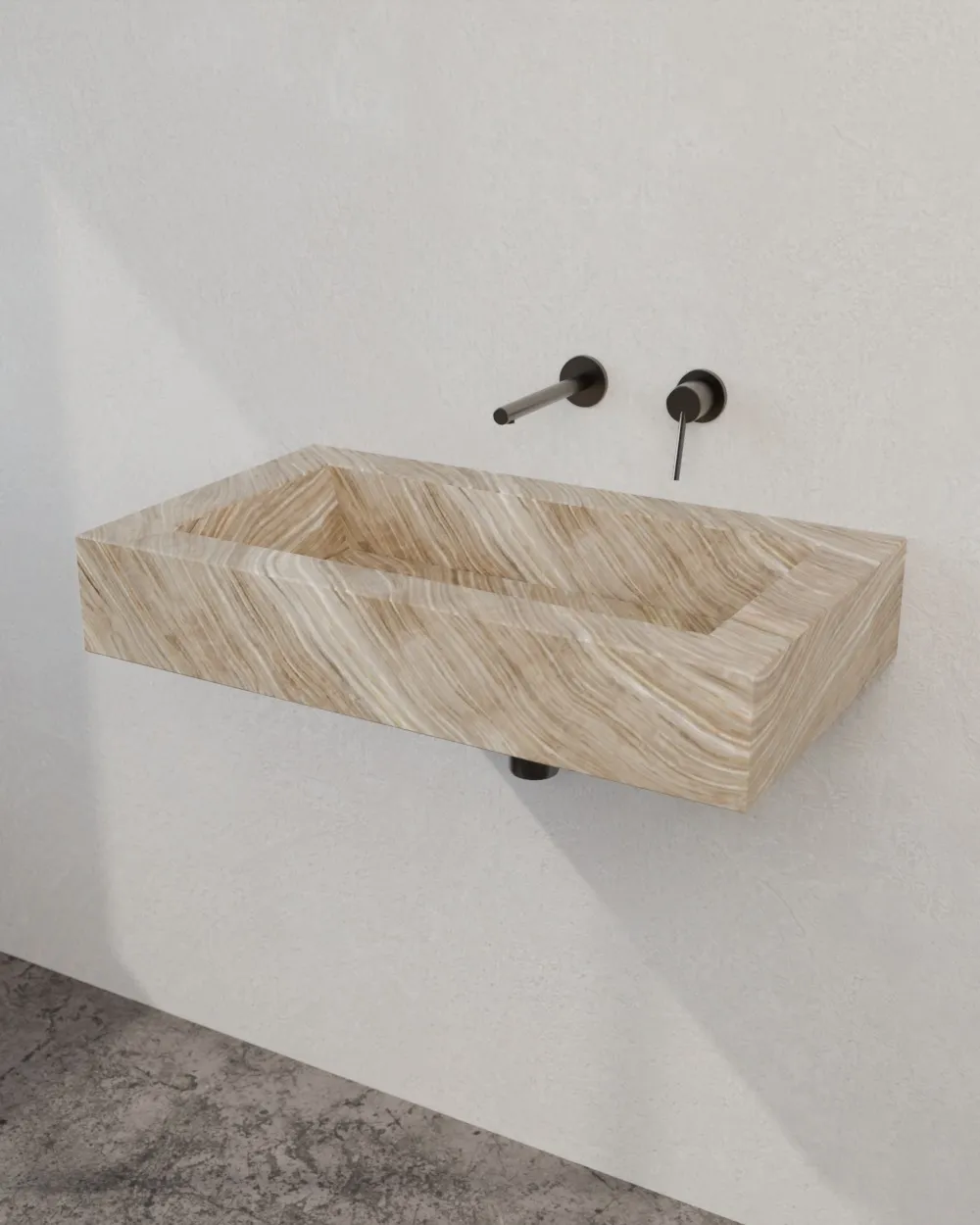
You can see every ceramic on the washbasin in the configurator, where you build it to your own size.


